

Introduction: Understanding the Meaning of God
The word God can be understood as three divine forces working together in harmony:
- Brahma — the Creator
- Vishnu — the Protector
- Lord Shiva — the Transformer
Among them, Lord Shiva is often called the Destroyer, which may sound frightening—especially for children. But in reality, Shiva does not destroy life. He removes what is old, negative, and harmful, making space for new beginnings and positive growth.
Just like a tree sheds dry leaves before growing fresh ones, Lord Shiva clears darkness from the world and our hearts.
Lord Shiva: The Loving and Innocent God for Children
Lord Shiva is lovingly known as Bhola Shankara, meaning the innocent and simple Lord.
He does not expect grand offerings.
Even:
- A drop of water
- A small flower
- A single leaf
offered with love is enough to please him.
Life Lesson for Children
God values your heart, not your wealth.
Kindness, honesty, and love are the greatest offerings.
Why Is Lord Shiva Called the Destroyer?
Lord Shiva is called the Destroyer because he removes negativity within us, such as:
- Anger
- Jealousy
- Ego
- Greed
- Fear
Think of Shiva as a gardener. Just as a gardener trims plants to help them grow stronger, Shiva removes inner darkness so goodness can flourish.
A Simple Story for Children
A child once asked:
“Why does Shiva destroy?”
The teacher replied:
“If your room is full of broken toys, where will you keep new ones?”
The child understood—
Shiva creates space for happiness and new beginnings.
Why Do We Worship the Shivalinga?
Lord Shiva has no single form because he is everywhere—in nature and within us.
The Shivalinga represents:
- Infinity (no beginning or end)
- Divine energy
- Universal consciousness
It reminds us that God is endless, formless, and present everywhere.
Shiva’s Family: A Lesson in Unity and Harmony
Lord Shiva’s family teaches a powerful lesson about peace and unity:
- Nandi (bull) — Shiva’s vehicle
- Lion — Parvati’s vehicle
- Mouse — Ganesha’s vehicle
- Peacock — Kartikeya’s vehicle
- Snake — Around Shiva’s neck
These animals are natural enemies, yet they live together peacefully.
The Lesson
Where there is love, there is no fear.
Differences disappear when hearts are united.
The Story of Neelakantha: Why Shiva’s Throat Is Blue
During the Samudra Manthan (churning of the ocean), a deadly poison called Halahala emerged.
To save the universe, Lord Shiva drank the poison, and Goddess Parvati held his throat to stop it from spreading. His throat turned blue, and he became:
Neelakantha — The Blue-Throated Lord
Life Lesson
True heroes protect others, even at personal cost.
Meaning of Abhishekam: Shiva Worship Explained
Abhishekam is a sacred ritual where devotees offer liquids to the Shivalinga.
It represents devotion, purification, and surrender.
Meaning of Each Offering
- Water — Purity
- Milk — Love
- Curd — Strength
- Honey — Sweetness
- Ghee — Wisdom
- Sugar — Happiness
- Bilva Leaves — Removal of negativity
Together, they form Panchamritam, symbolizing surrender of ego and desires.
Sri Rudram: Powerful Shiva Prayer and Its Meaning
Sri Rudram is one of the most powerful prayers dedicated to Lord Shiva.
It includes:
- Namakam — Surrender (Om Namah Shivaya)
- Chamakam — Asking for health, prosperity, and wisdom
Lesson for Children
It is okay to pray for both success and spiritual growth.
Mahashivaratri: Significance and Spiritual Meaning
Maha Shivaratri is one of the most important Hindu festivals dedicated to Lord Shiva.
What Devotees Do
- Stay awake (Jagaran)
- Chant and meditate
- Perform Abhishekam
Spiritual Meaning
- Darkness → Light
- Ignorance → Wisdom
A Simple Story
A poor man unknowingly worshipped Shiva by lighting a lamp and offering leaves. His pure devotion brought him blessings.
Even small acts done with love are powerful.
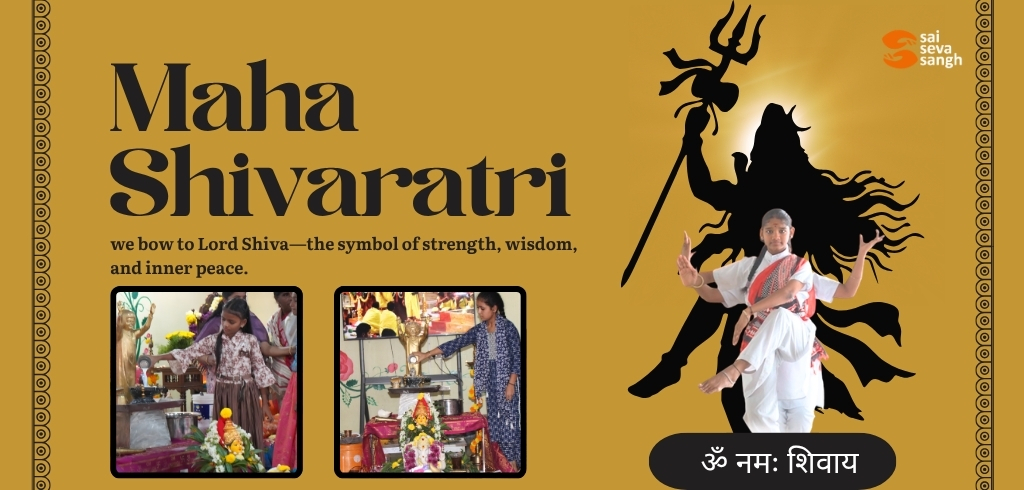
Mahashivaratri Celebration at Sai Seva Sangh
At Sai Seva Sangh, students celebrate Mahashivaratri with devotion and unity.
Activities
- Temple decoration with flowers and rangoli
- Performing Abhishekam
- Chanting Om Namah Shivaya
- Singing bhajans
- Night prayers (Jagaran)
Values Students Learn
- Discipline
- Calmness
- Kindness
- Teamwork
Life Lessons from Lord Shiva for Children
Lord Shiva teaches simple yet powerful life values:
- Be calm and humble
- Remove bad habits
- Love all living beings
- Help others selflessly
- Learn from mistakes
Shiva removes darkness—not people.
Conclusion: The Eternal Message of Lord Shiva
Lord Shiva is both:
- The Transformer who removes negativity
- The Compassionate Bhola Shankara who blesses easily
He does not ask for wealth—only love, faith, and sincerity.
Final Thought
Shiva is not the end—he is the beginning after every ending.
Om Namah Shivaya
May Lord Shiva bless every child with peace, courage, and kindness.

Leave A Comment