
The Role of Chhatrapati Shivaji Maharaj in Indian Maritime History
India’s maritime history is rich, powerful, and deeply connected to its rise as a civilization. Yet, one name stands out when we talk about naval warfare, coastal defense, and maritime strategy — Chhatrapati Shivaji Maharaj. At a time when foreign powers dominated the seas, he built India’s first organized naval force and laid the foundation for modern maritime security.
Today, he is proudly remembered as the Father of the Indian Navy. His naval vision was centuries ahead of his time, influencing not only the Maratha Empire but also inspiring the modern Indian Navy’s doctrine and coastal defense strategies.
In this blog, we will explore Shivaji Maharaj’s contribution to Indian maritime history, his naval warfare strategies, coastal forts, and his lasting legacy in strengthening India’s maritime power.
Why Maritime Power Was Crucial in the 17th Century
During the 17th century, the Arabian Sea was not just water — it was a battlefield.
Foreign powers like the Portuguese, British, and Dutch had begun establishing dominance over India’s western coastline. The Siddis of Janjira controlled strategic sea routes. Trade, economy, and security were under constant threat.
Sea trade was the lifeline of kingdoms. Even today, nearly 90% of global trade happens through maritime routes. Shivaji Maharaj understood this long before maritime strategy became a formal doctrine.
He realized three key facts:
-
Whoever controls the sea controls trade.
-
Whoever controls trade controls wealth.
-
Whoever controls wealth controls power.
This foresight made him the first Indian ruler to seriously invest in naval defense and maritime security.
Establishment of the First Indigenous Indian Navy
One of the most remarkable achievements of Shivaji Maharaj was the creation of a structured and well-equipped navy.
Unlike other rulers who relied heavily on foreign ships or ignored sea power, Shivaji built:
-
Indigenous shipbuilding yards
-
Trained naval officers and sailors
-
Fortified coastal bases
-
A structured naval command system
His navy was not symbolic. It was strategic, tactical, and functional.
Objectives of Shivaji’s Navy
The main goals behind establishing the Maratha Navy were:
-
Protect the Konkan coastline
-
Safeguard maritime trade routes
-
Prevent foreign invasions
-
Counter Portuguese and British expansion
-
Challenge the Siddis’ dominance
This was the birth of organized Indian naval power.
Coastal Forts: The Backbone of Maritime Defense
Shivaji Maharaj understood that naval power required strong coastal infrastructure. He built and strengthened several sea forts along the western coast of India.
Major Naval Forts
-
Sindhudurg Fort
-
Vijaydurg Fort
-
Suvarnadurg Fort
These forts were strategically designed with deep understanding of tides, currents, and coastal geography.
They served as:
-
Naval bases
-
Surveillance points
-
Defense strongholds
-
Supply and repair stations
Sindhudurg Fort, built on an island, was nearly impossible to penetrate. It symbolized maritime strength and engineering brilliance.
These coastal forts were not just military structures — they were statements of sovereignty.
Guerrilla Warfare at Sea: A Revolutionary Naval Strategy
Shivaji Maharaj is famous for his land-based guerrilla warfare tactics (Ganimi Kava). But few realize that he successfully adapted similar tactics at sea.
Instead of confronting large European fleets directly, he:
-
Used smaller, faster ships
-
Conducted surprise attacks
-
Controlled shallow coastal waters
-
Avoided deep-sea battles
This form of naval guerrilla warfare gave the Maratha Navy a major strategic advantage.
His fleet included vessels such as:
-
Gallivats (light and fast ships)
-
Gurabs (armed warships)
-
Patrol boats for coastal surveillance
These ships were agile and ideal for coastal combat. European ships, though larger, struggled in shallow waters.
This innovative strategy made Shivaji Maharaj one of the earliest pioneers of asymmetric naval warfare.
Maritime Administration and Naval Leadership
Shivaji Maharaj did not treat the navy as an afterthought. He institutionalized it.
He appointed naval commanders known as Darya Sarang and established clear naval ranks and responsibilities. Dedicated funding was allocated to shipbuilding and coastal defense.
His naval administration included:
-
Organized dockyards
-
Revenue systems for maritime security
-
Coastal intelligence networks
-
Maintenance and supply chains
This structured system strengthened the Maratha Empire’s control over the Arabian Sea region.
Protecting Trade and Strengthening the Economy
Maritime security directly impacts economic growth. Shivaji Maharaj recognized this connection clearly.
By protecting ports and trade routes, he ensured:
-
Stable commerce
-
Safe merchant activities
-
Increased state revenue
-
Economic independence
Even today, India’s economy relies heavily on maritime trade. Exports such as petroleum products, textiles, engineering goods, and pharmaceuticals depend on secure sea routes. Imports like crude oil, electronics, and machinery arrive through maritime channels.
Modern maritime security strategies echo Shivaji’s original understanding — secure seas mean a secure economy.
Legacy in the Modern Indian Navy
The influence of Shivaji Maharaj can still be seen in today’s naval traditions.
In 2022, the Indian Navy introduced a new naval ensign inspired by Shivaji Maharaj’s royal seal, replacing colonial-era symbols. This marked a symbolic return to indigenous maritime heritage.
The Navy’s motto “Sam No Varunah” reflects ancient maritime philosophy and aligns with Shivaji’s vision of protecting the seas with strength and integrity.
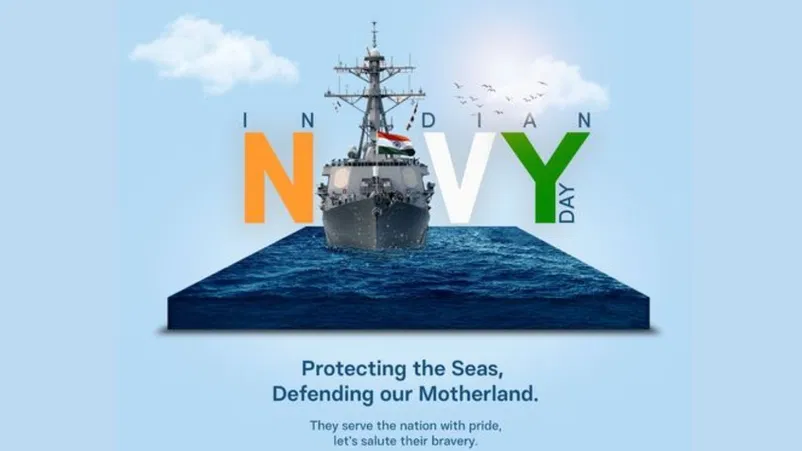
Every year, India celebrates Navy Day on December 4 to commemorate naval bravery during the 1971 war. While modern achievements are celebrated, the roots of Indian naval strength trace back to Shivaji Maharaj’s pioneering efforts.
Life at Sea: Then and Now
Life in the navy demands courage, discipline, and resilience.
In Shivaji’s time, sailors faced:
-
Rough weather
-
Long sea journeys
-
Combat risks
-
Limited navigation technology
Today, naval personnel operate advanced warships and submarines, but challenges remain:
-
Long deployments away from family
-
High-risk missions
-
Harsh sea conditions
-
Constant vigilance
The spirit of sacrifice and dedication remains unchanged.
Thousands of naval officers and sailors have given their lives to protect India’s maritime borders. Their service continues the legacy of maritime courage that Shivaji Maharaj began.
Why Shivaji Maharaj Is Called the Father of the Indian Navy
Shivaji Maharaj earned this title because he:
-
Established India’s first organized navy
-
Built strategic coastal forts
-
Protected maritime trade routes
-
Introduced naval guerrilla warfare
-
Created a structured naval administration
He was the first Indian ruler to recognize that naval power was essential for sovereignty and economic growth.
His maritime vision was not temporary — it was transformational.
Who is known as the Father of the Indian Navy?
Chhatrapati Shivaji Maharaj is known as the Father of the Indian Navy because he established the first organized naval force in India and built strategic coastal forts to protect maritime trade and defend against foreign powers.
Conclusion: A Salute to the Sea Warrior King
The role of Shivaji Maharaj in Indian maritime history is monumental. He did not simply build ships — he built a vision. He understood that national security extended beyond land borders to the vast waters surrounding the nation.
At a time when European powers dominated global seas, he dared to challenge them. He secured coastlines, protected trade, and strengthened India’s maritime identity.
Today, as India grows into a global maritime power, the strategic foundations laid by Shivaji Maharaj continue to inspire naval doctrine and coastal defense policies.
His legacy sails with every Indian warship.
His vision guards every coastline.
His courage echoes across the Arabian Sea.
Jai Hind.






Leave A Comment